The short answer: the outside forces that move a small venue's sales are mostly predictable: the weather, the school calendar, bank holidays, local events, what's happening to household budgets, and changes on your street. You can't control them, but you can see them coming. Keep a simple calendar of what's ahead, compare it with your own booking pattern, and adjust opening hours, staffing, ordering and booking rules a week or two in advance.
The factors that move sales most
Weather
Sun fills terraces and beer gardens and empties dining rooms; rain does the opposite, and heavy rain or snow cancels plans altogether. Weather mostly changes walk-ins and last-minute bookings. Advance bookings for a special occasion usually hold.
How to plan: check the forecast when you set the rota for the week. On a sunny forecast, staff the outside area and prepare for walk-ins; on a stormy one, expect cancellations and plan prep accordingly.
Seasons, school holidays and bank holidays
Summer, Christmas and Easter change who's around and when. School holidays move family trade from weekends into weekdays. Bank holidays can make a Monday busier than a Saturday, or empty a town completely if everyone's away.
How to plan: put the school and bank holiday dates for your area in the calendar at the start of the year. Set holiday opening hours and closed dates early, so guests can't book a table on a day you'll be shut.
Local events and sport
A concert, a football match, a festival, a graduation or a big conference nearby can fill every table, or empty them if the event pulls people elsewhere. Matches on TV help pubs and can quieten restaurants.
How to plan: follow your local council, venues and sports fixtures. For big events, consider a shorter booking length to turn tables, a set menu, or a waitlist for guests who couldn't get a table.
The cost of living
When household budgets are tight, guests go out less often, choose cheaper dishes, skip a second drink or move from dinner to lunch. People still celebrate the occasions that matter, but everyday visits are the first to go.
How to plan: watch average spend and visit frequency, not just covers. A good-value set lunch, an early-evening menu or a loyalty treat for regulars can hold trade without cutting prices across the board.
Changes on your street
Roadworks, a closed car park, a strike on the trains, a big office closing or a new competitor opening nearby can all change footfall for weeks.
How to plan: sign up to your council's roadworks alerts, and keep in touch with neighbouring businesses. If footfall drops, make it easier for people who already know you to book: remind regulars, and make sure your booking link is easy to find online.
Where guests look for somewhere to eat
How people choose a venue keeps changing. Many now search on Google Maps, scroll Instagram or ask an AI assistant for a recommendation. If you can't be found or booked in those places, you lose guests to venues that can, without ever knowing.
How to plan: keep your Google Business Profile up to date, add a booking link to it, and put the same link in your Instagram bio and on your website.
Use your own booking data to see the pattern
National figures tell you very little about your venue. Your own bookings tell you a lot:
- Your busiest days and hours, so you know which sessions external factors hurt or help most.
- How far ahead guests book, so you know how much warning a forecast or an event gives you.
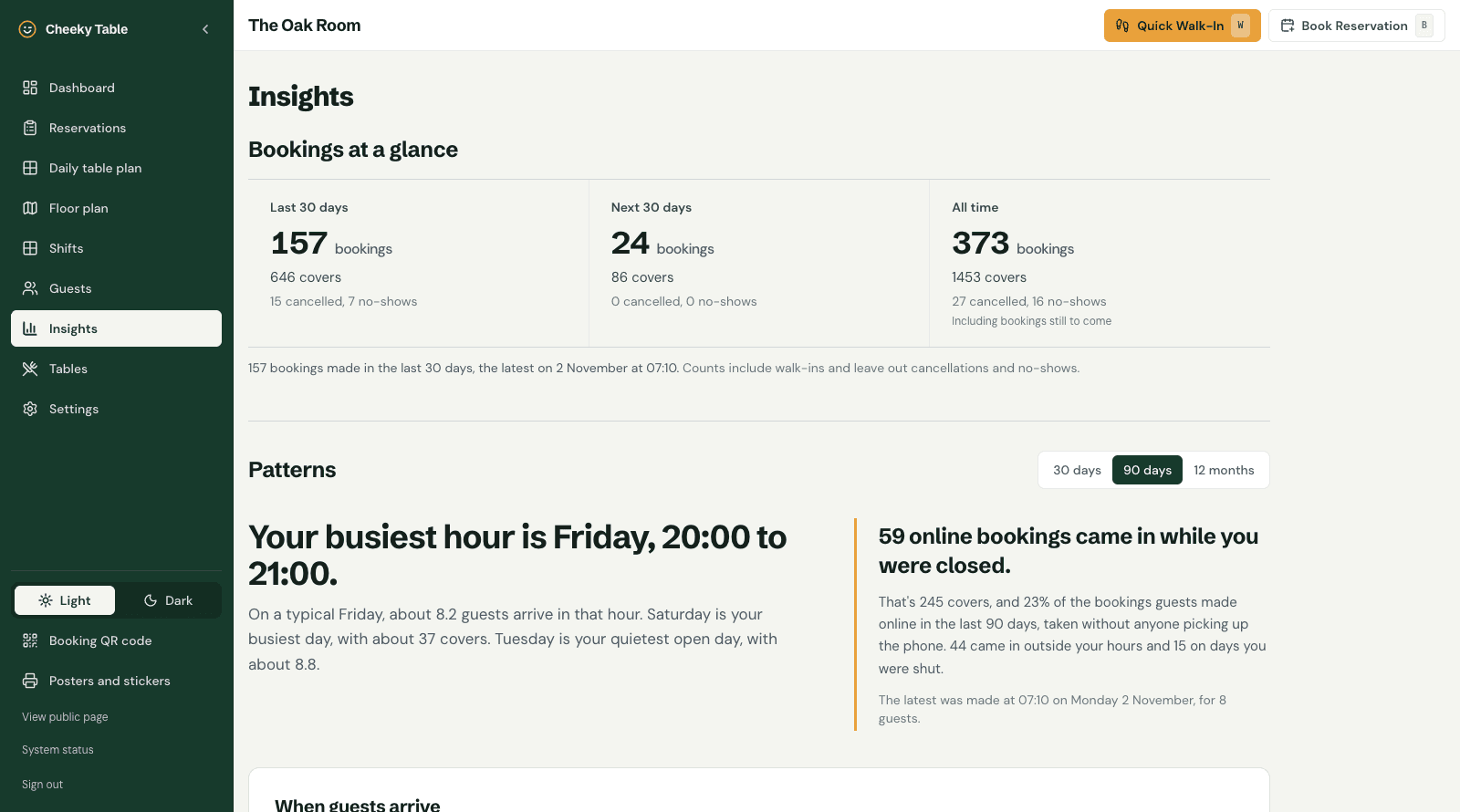
- Bookings made while you were closed, which shows how much demand you'd miss without online booking.
- Your quietest open day, the first candidate for a promotion or a shorter opening.
Cheeky Table's Insights page shows all four for each venue, built from its own bookings.
A simple planning routine
- Once a year: add school holidays, bank holidays and the big local events to a shared calendar.
- Once a month: set holiday hours and closed dates, and look at your busiest and quietest days.
- Every week: check the forecast and next week's bookings, then set the rota and the order.
- On the day: adjust for the weather and for walk-ins, and use a waitlist on the busy days.
Frequently asked questions
What external factors affect restaurant sales the most?
For most small venues, the weather, school and bank holidays, local events, household budgets and changes nearby, such as roadworks or a new competitor. Which matters most depends on your location and who your guests are.
How does the weather affect restaurant bookings?
Bad weather tends to increase cancellations and reduce walk-ins, while good weather boosts outdoor seating and walk-ins but can empty indoor dining rooms. Planned occasions usually go ahead whatever the weather.
How can a small restaurant predict how busy it will be?
Combine what's already booked with what you know is coming: the forecast, the school calendar and local events. After a few months of online bookings you'll also see your own pattern by day and hour, which is the best guide you have.
How do I stop guests booking on days we're closed?
Set closed dates and special opening hours in your booking system as soon as you know them, so the booking page simply doesn't offer those days.
Cheeky Table gives independent restaurants, cafés, pubs and wine bars online bookings around the clock, closed dates and holiday hours, a waitlist for busy days, and Insights built from your own bookings. One flat £9.99 a month with no per-cover fees. Claim 6 months free →